News
09.04.2026Drilling FAQ Part 2 | Chipping

Clean hole edges are crucial for dimensional accuracy and functional performance—chipping at the entry or exit can quickly compromise both. Common causes include excessive feed rates, unsuitable tool geometries, or unstable clamping conditions. This FAQ helps systematically identify root causes and provides proven solutions to improve edge quality.
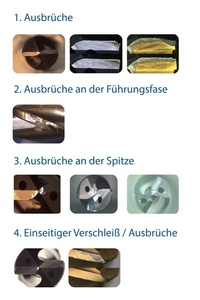
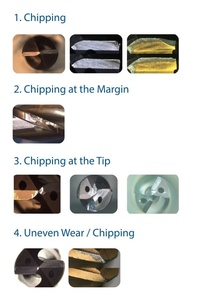
1. Chipping
Possible causes
Occurs primarily in thin materials, through holes or cross holes, and interrupted cuts. Contributing factors include:
- Unsuitable cutting speed
- Incorrect feed rate
- Insufficient coolant supply
- Incorrect or overly brittle substrate
- Unsuitable machining strategy
- Unstable clamping
- Material-specific properties
Corrective measures - parameters
- Increase cutting speed (Vc)
- Reduce feed rate
- Reduce load at hole exit
- Increase oil content in the emulsion
- Ensure machine and tool stability
- Optimize runout
- Reduce overhang
Corrective measures - geometry
- Apply a radius or chamfer
- Use a more pressure-resistant substrate
- Adjust chamfer width
2. Chipping at the Margin
Possible causes
- Chip evacuation issues
- Tool movement within the workpiece or tool holder due to:
- Feed
- Coolant
- Substrate
- Machining strategy
- Clamping
Corrective measures - parameters
- Reduce feed rate
- Reduce by 15–20% at hole exit
- Increase coolant flow rate
- Ensure proper workpiece and tool clamping
- Use a smaller guide bushing
Corrective measures - geometry
- Use a more pressure-resistant substrate
3. Chipping at the Tip
Possible causes
- Excessive pressure on the chisel edge due to:
- Cutting speed
- Feed
- Coolant
- Substrate
- Machining strategy
- Geometry
Corrective measures - parameters
- Increase cutting speed
- Reduce feed rate
- Reduce feed at hole entry
- Increase coolant pressure
- Modify peck drilling cycle
- Chips remaining at the bottom of the hole
- Check if the workpiece surface is flat
- Check tool clamping and runout
- Reduce overhang
Corrective measures - geometry
- Increase protection chamfer
- Increase clearance angle
- Modify point thinning
- Use a more pressure-resistant substrate
- Use internal coolant supply
4. Uneven Wear / Chipping
Possible causes
Occurs almost exclusively in horizontal machining:
- Clamping
Corrective measures - parameters
- Ensure proper tool alignment
- Check stability and runout